
Spiral Cellar vs Wine Fridge vs Cellar Room
Which Is Right for Your Collection?

How Spiral Cellars Protect Your Wine
Proper wine storage is essential for preserving the quality and flavour of your collection. Spiral Cellars are designed to create the optimal environment for wine maturation, mimicking the conditions of a traditional underground cellar.
Our unique passive ventilation system uses the natural temperature of the earth to maintain a consistent cellar climate. Fresh air is drawn in through an external vent, circulated through the cellar, and then expelled, ensuring optimal temperature and humidity levels.
This natural cooling system eliminates the need for expensive and energy-consuming climate control systems, making Spiral Cellars a cost-effective and environmentally friendly choice. If additional mechanical cooling is required, this is also possible.
At a glance
How a wine fridge, a dedicated cellar room and an underground Spiral Cellar compare on the things that matter most to your wine.
| Feature | Wine fridge | Cellar room | Spiral CellarOur pick for ageing wine |
|---|---|---|---|
| How it keeps wine cool | Compressor or thermoelectric cooling | Insulation plus a mechanical cooling unit | The earth's natural insulation and passive ventilation; mechanical cooling optional |
| Temperature stability | Good, but depends on the unit and the room around it | Good when well insulated and sealed | Very stable, because it sits underground |
| Vibration | Compressor creates constant low-level vibration | Some from the cooling unit | Minimal, with no compressor needed |
| Light exposure | Glass doors let light in unless UV-treated | Controlled | Dark below floor level |
| Floor space used | A cupboard-sized footprint | A whole room | Very little; it sits under the floor |
| Capacity | Tens to a few hundred bottles | Large, limited by room size | [CONFIRM] bottles depending on depth |
| Running costs | Ongoing electricity | Ongoing electricity for the cooling unit | Little to none with passive ventilation |
| Lifespan | Limited by the appliance | Cooling unit needs servicing and replacement | Built into the home in limestone concrete |
| Adds to the home | No, it's an appliance | Yes, if well executed | Yes, as a permanent feature |
Wine Fridges
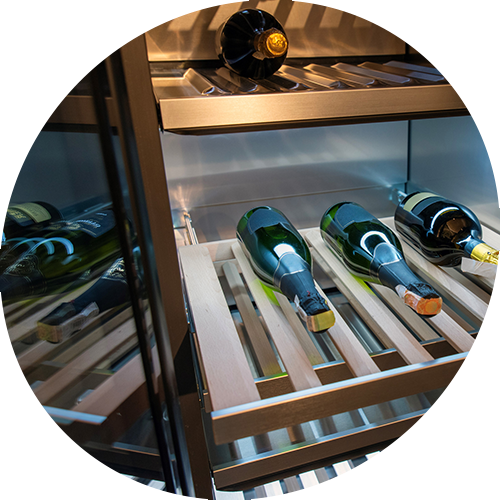
A wine fridge is the easiest place to start. It plugs in, sits in a kitchen or bar, and holds a temperature without any building work.
The trade-offs show as your collection grows. Most units hold a limited number of bottles, and the compressor runs constantly, which adds vibration and running costs. If the fridge fails, your wine is exposed to whatever temperature the room is, and in an Australian summer that can happen quickly.
Best for: smaller collections, wines you'll drink within a year or two, and renters.
Dedicated cellar rooms
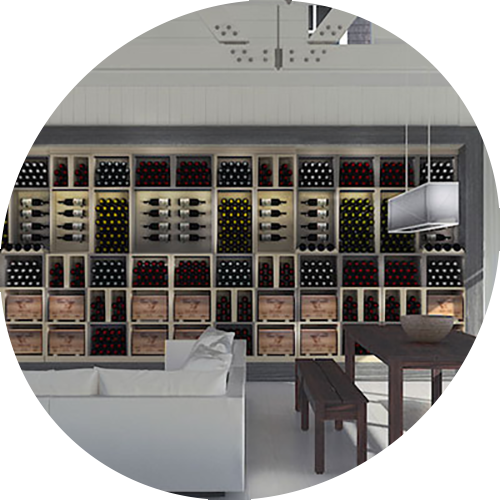
A cellar room converts a basement, under-stair space or spare room into wine storage. It needs proper insulation, a vapour barrier, a sealed door, racking and a cooling unit sized to the space.
Done well, a cellar room holds a large collection and can look spectacular. But it takes up a whole room, needs careful design to avoid condensation and temperature swings, and depends on a mechanical cooling unit that uses power and will eventually need replacing. Many Australian homes also don't have a basement to convert.
Best for: large collections in homes with a spare room or basement to give up.
Spiral Cellars
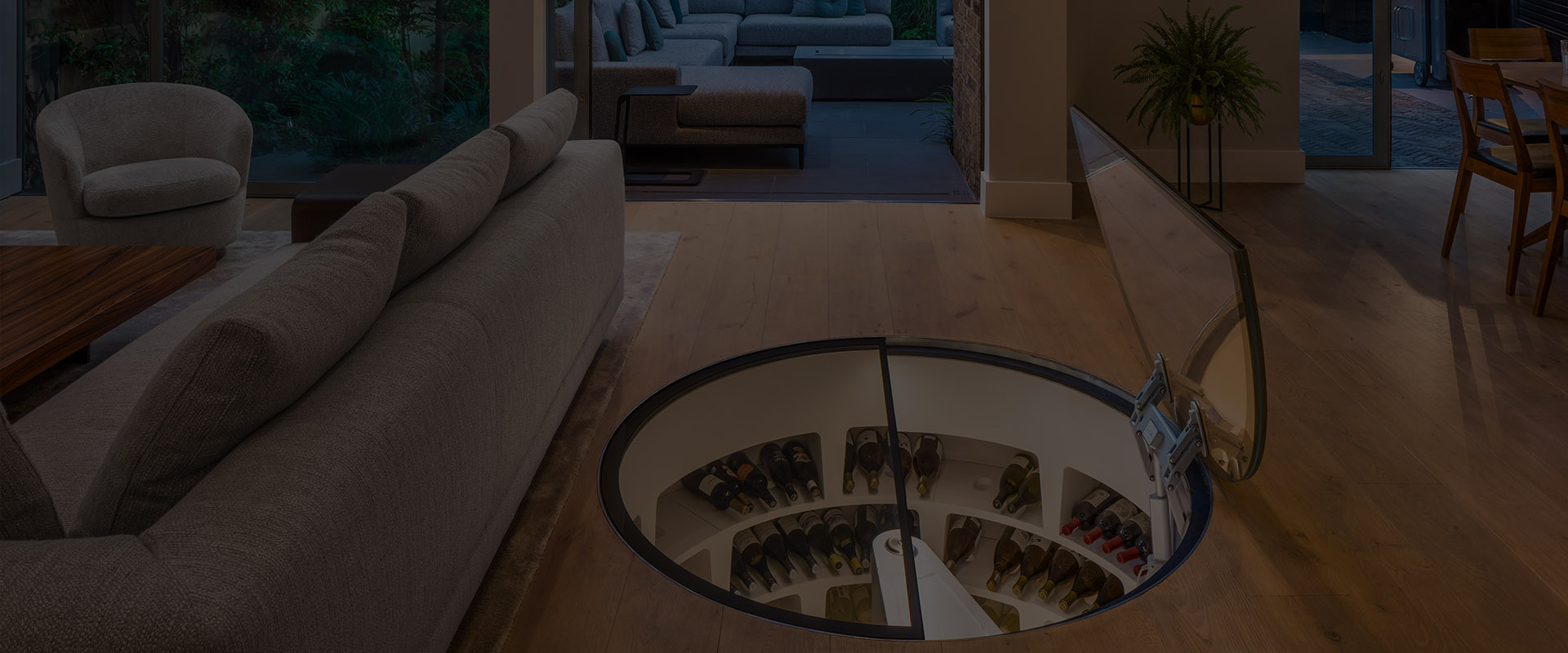
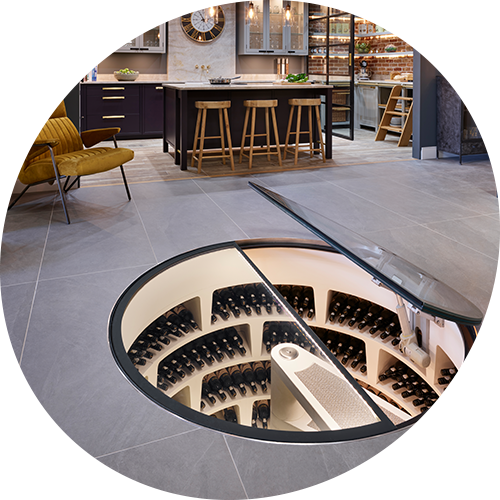
A Spiral Cellar is built into the ground beneath your floor, with a spiral staircase surrounded by wine bins. It works the way traditional underground cellars always have: the surrounding earth keeps the temperature steady, and a passive ventilation system draws fresh air in through an external vent, circulates it, then expels it.
That means no compressor, minimal vibration, darkness below floor level and little or no running cost. The cellar is made from engineered limestone concrete, which resists moisture and temperature fluctuation. And because it sits underground, it adds storage without taking a room. All you see above the floor is the door, from a round glass trap door to a recessed door finished in your own floorboards.
Where extra cooling is needed, mechanical cooling can be added.
Best for: serious collectors who want ideal long-term ageing conditions, homes short on space, and anyone who wants their cellar to be a feature.


FREQUENTLY ASKED QUESTIONS
Is a Spiral Cellar better than a wine fridge?
For long-term ageing, an underground cellar has clear advantages: steadier temperature, natural humidity, darkness and no compressor vibration. A wine fridge suits smaller collections and wine you plan to drink soon.
Is a Spiral Cellar cheaper to run than a cellar room?
A cellar room needs a mechanical cooling unit running year-round. A Spiral Cellar relies on passive ventilation, so running costs are minimal unless you add mechanical cooling.
What happens to my wine if the power goes out?
In a wine fridge or cooled cellar room, the temperature starts rising as soon as the cooling stops. A Spiral Cellar's temperature comes from the surrounding ground, so a power cut has little effect.